The silent engine of extreme logistics
When biological materials (UN3373, UN2814), mRNA vaccines, diagnostic devices, or special pharmaceutical products—as well as frozen food specialties—must travel under Deep Frozen conditions, there is only one passive technology capable of guaranteeing the result: Dry Ice. This is solid-state carbon dioxide (CO₂) characterized by a stable temperature of -78.5°C. Another unique feature of the product is sublimation: dry ice passes from a solid state to a gaseous state without going through the liquid phase, leaving the inside of the packaging and the contained product perfectly dry and intact.
Not all Dry Ice is the same: the importance of purity
Often considered a simple commodity, the quality of dry ice makes a massive difference. The liquid CO₂ used by Dryce meets rigorous food purity standards, and Dryce's production process is specifically qualified to generate high-density dry ice thanks to extremely high extrusion pressures. Most importantly, we can guarantee the production of "food grade" E290 Dry Ice, usable as an actual food ingredient, compliant with Regulations (EC) 1333/2008, (EU) 231/2012, (EC) 178/2002, and (EC) 852/2004 regarding food ingredients, additives, safety, and hygiene (HACCP).
Different Uses, Different Formats
Dryce offers its customers a wide range of dry ice formats, optimized according to:
Logistics/packaging use or Dry Ice blasting
Type of container in which the product is used
Surface-to-mass ratio
Quantity to be supplied (from 5 to 300 kg for each container provided)
The dry ice formats produced by Dryce are as follows:
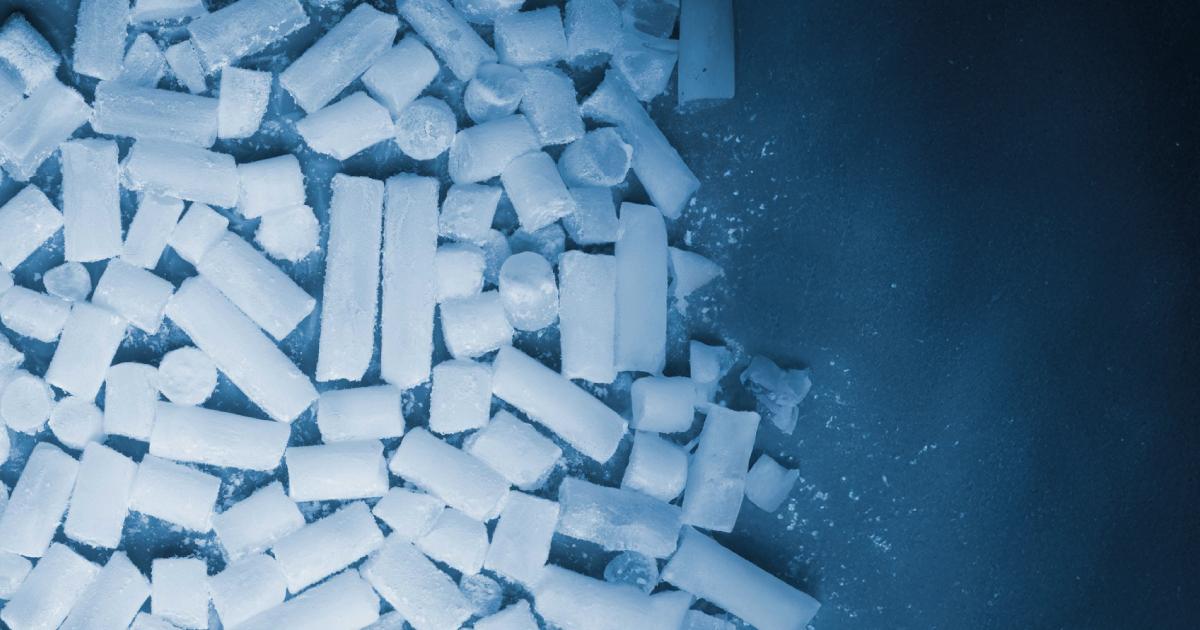
10 and 16 mm Pellets: Easy to dose by weight in small and medium-sized isothermal containers, capable of filling the gaps between the product and the container walls.
0.5 kg Slices: Specifically designed for aircraft and train catering operators, they are easy to handle safely thanks to their plastic or paper wrapping.
5 and 10 kg Blocks: Characterized by a high mass-to-surface ratio and slower sublimation compared to other formats, they are ideal for large-volume containers destined for international shipments with long transit times.
3 mm Pellets: The ideal format for Dry Ice Blasting applications for surface cleaning. Also used in small containers for their ability to settle into empty spaces between product and container.
Operational Safety (HSE): The mandatory rules
Handling a product at -80°C requires rigor. At Dryce, we promote a safety culture by providing our customers with training events and clear documentation on the safe handling of dry ice:
Use prescribed PPE: Gloves, safety goggles, and appropriate clothing to avoid cold burns.
No airtight containers: As CO₂ increases in volume during sublimation into gas, it could cause sealed, airtight containers to explode.
Ventilated environments: CO₂ is an asphyxiant and is heavier than air. Storage in basements or confined spaces is prohibited. For car transport, the suggested limit is 50 kg, with the mandatory requirement to travel with windows open.
CO₂ concentration limits: Workplace CO₂ concentration is limited by regulations; verify compliance with limits and consider adopting monitoring and alarm systems.
Do not ingest: Do not swallow dry ice or mix it with food or drinks.
Avoid uncontrolled contact: Keep dry ice away from liquids or hot surfaces.

-medium.jpg)